
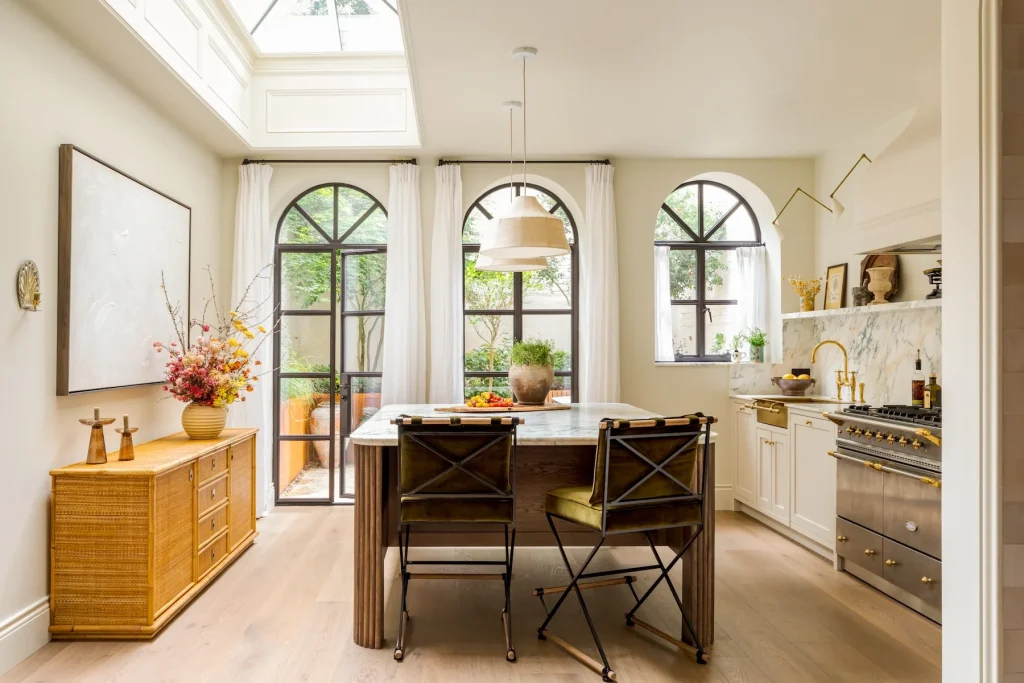
Renovating a kitchen in a Victorian home is not the same job as fitting one into a new-build. The rooms were never designed as modern kitchens. The proportions rarely match standard unit sizing. And the structural features that give these Twickenham houses their character tend to sit exactly where the new layout wants to go.
Knowing what each stage involves makes the whole thing far easier to navigate.
What Victorian Kitchens in Twickenham Are Actually Like
Twickenham has a lot of Victorian terraces and Edwardian semis. Most of their rear kitchens have been altered over the decades, often more than once. An extension changed the proportions. A wall came down and created an open-plan arrangement the original builders never imagined.
What you are left with is a room that has character and complications in roughly equal measure.
The chimney breast interrupts the run of units exactly where a continuous worktop would have worked. Ceilings sit higher than modern builds expect, so standard units look slightly lost. Walls are seldom straight. Floors in rear extensions can drop a little, which matters once you start levelling cabinetry.
None of this stops you having a good kitchen. It just has to be understood properly before the design begins.
The Renovation Process
Starting with the brief
Every Victorian kitchen renovation starts with a thorough brief. This part is not about choosing finishes or settling on a layout. It is about how the space is genuinely used, what the new kitchen has to do, and what the room itself will allow.
Take the chimney breast. In the right spot, it can anchor a design and give useful depth for a larder or integrated appliances. Whether to keep it or remove it affects the brief, the budget and the timeline all at once. That is a decision for the start of the project, not the middle of it.
The initial consultation is a professional service rather than a free introductory call. The fee comes off the kitchen deposit if the project proceeds. Nothing needs to be committed to on the day.
Design development
With the brief established, design development begins: layouts, materials, 3D visualisations, appliance choices. For a Victorian kitchen, this stage is largely about working with the room’s structural quirks rather than fighting them.
Bespoke cabinetry makes that possible. Heights adjust to the ceiling. Depths vary where a wall is thick or runs out of true. The units are designed around the chimney breast instead of being compromised by it.
And the design itself is drawn individually. There is no preset range to select from. Every element responds to the room and the household, and where a finish or detail needs confirming, a sample is made before production.
Expect four to six weeks for this stage. It can stretch when decisions are slow to land, or when changing one element pulls others along with it.
If building work is involved
A fair number of Twickenham Victorian renovations include some structural work alongside the kitchen. A rear extension. A wall removed. A roof light added to pull in more daylight.
When that is the case, the kitchen design cannot be finalised until the building work is done and the real dimensions are confirmed. This catches people out more than almost anything else, and it is one of the more common reasons a project slips. Allow for it in the timeline from the start and it stops being a problem.
Manufacturing and installation
Once the design is signed off, it goes into manufacturing. That takes ten to twelve weeks. The cabinetry is made to order, checked over before it leaves, then delivered and installed in sequence.
Fitting a family kitchen takes around two weeks. Worktops are templated only after the cabinets are in, then fabricated separately, which can add another week. A hand-painted kitchen is painted after the worktops go in, and that takes a further four to five working days.
All in, most projects run four to six months from first consultation to handover. A Victorian property with structural work involved tends to run longer. Six to nine months is realistic.
What Makes Victorian Renovations Different
Light
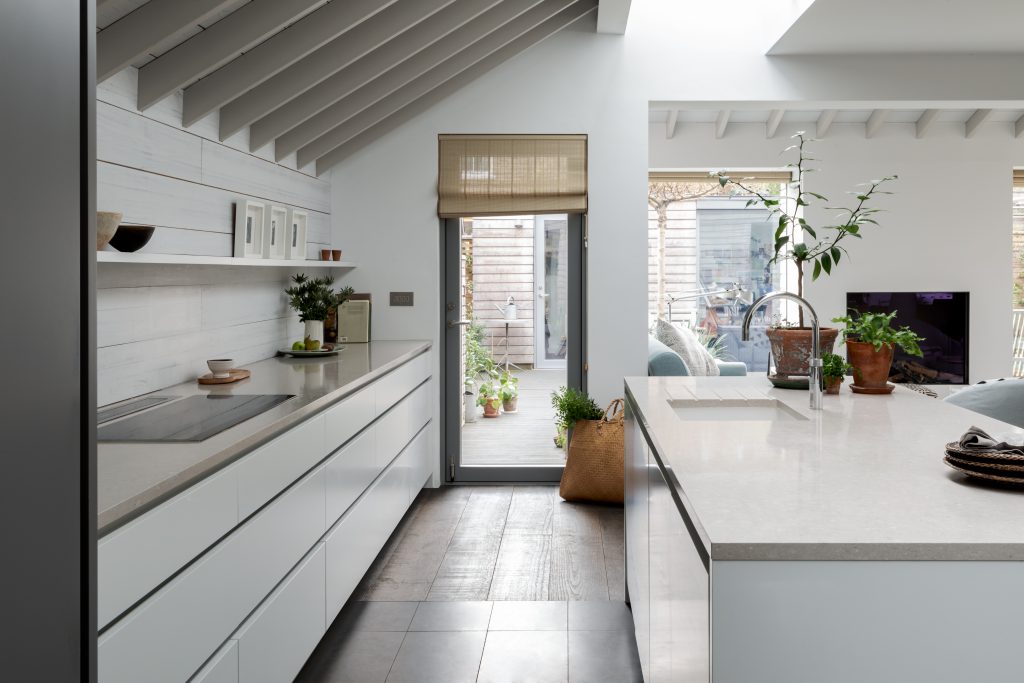
Rear Victorian kitchens can be short on natural light, especially in terraces where the extension sits hemmed in between neighbouring houses. How the kitchen handles that, and whether a roof light or a larger glazed door could bring more daylight in, is worth working into the design rather than treating as an afterthought.
Style
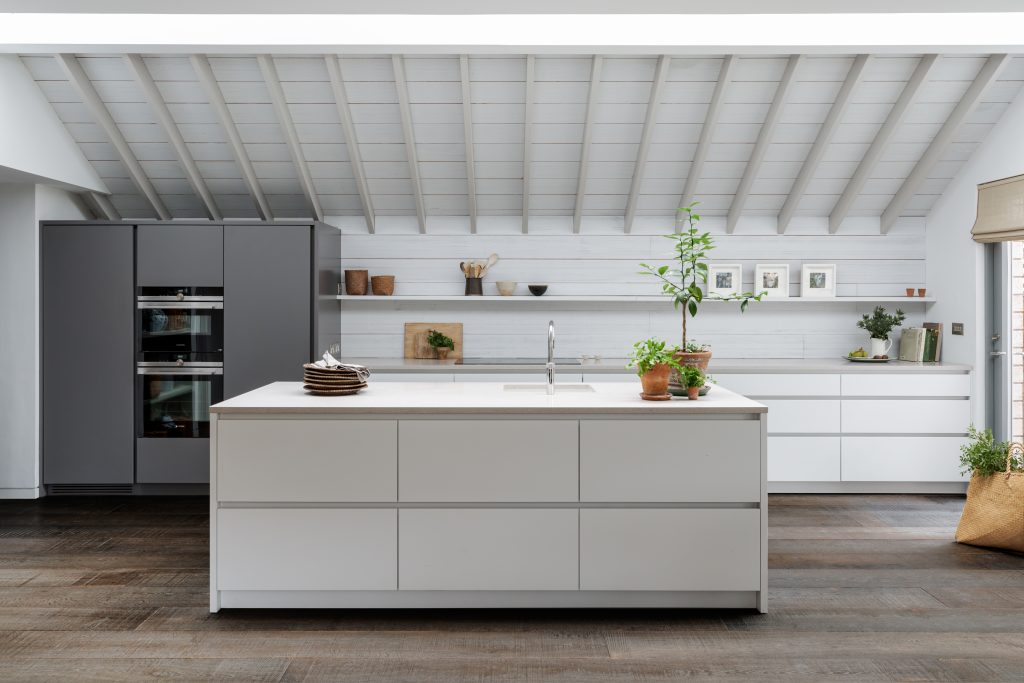
People often assume a kitchen in a Victorian home ought to look Victorian. It does not have to. A contemporary kitchen can sit very comfortably in a period property, as long as the proportions are handled with care and the materials relate to the building. The style matters less than whether the cabinetry is made to fit the room as it actually is.
Because a bespoke kitchen is designed individually, the style can be a considered mix of its own. Materials, finishes and details are chosen for this home and this household. In a period property, that care tends to produce something that feels genuinely part of the building rather than dropped into it.
Frequently Asked Questions
Four to six months from first consultation to handover for most projects. Where structural work is involved, such as a rear extension, a chimney breast removal or new glazing, six to nine months is more realistic. Manufacturing on its own accounts for ten to twelve weeks, once the design is signed off.
Usually not. Internal alterations rarely require it. Conservation areas and listed buildings are the exception and can carry additional requirements, so it is worth checking early, before the design is committed to.
It depends where it sits and what the kitchen needs from the room. Some are removed, where that is structurally possible and the layout genuinely benefits. Others earn their place, housing a range cooker, a larder or integrated appliances. The right answer comes from the room and the brief, not a general rule.
Yes, and plenty of people do. A contemporary kitchen works well in a period property. What counts is whether the cabinetry is made to fit the room as it really is, rather than standard units being forced around the architecture. Fit and proportion come before style.
Start the kitchen conversation early, but hold off finalising the design until any structural work is finished and the dimensions are confirmed. Early discussion shapes the brief and flags decisions that affect the building work itself. The final sign-off simply waits for the room to be ready.
Starting a Victorian Kitchen Renovation in Twickenham
Period kitchens reward thinking things through at the outset. The same structural constraints that make them difficult to design for are what make a well-resolved result so satisfying to live with afterwards.
Kate Feather designs bespoke kitchens for families across Twickenham and the surrounding area. Find out more about bespoke kitchen design in Twickenham.