

A kitchen extension changes the brief. The room gets larger, often significantly, which opens up layout options that were not possible before. But it also introduces a set of decisions and dependencies that a standard kitchen renovation does not have.
Getting the extension and the kitchen right together requires thinking about both at the same time, from the start.
Why the Kitchen Brief Needs to Come Early
The most common mistake in kitchen extension projects is treating the building work and the kitchen design as separate conversations.
An architect or structural engineer will design the extension to meet planning and structural requirements. But unless the kitchen brief is part of that conversation early on, decisions get made during the build that constrain the kitchen design later. Where roof lights go affects natural light. Where structural posts or steels land affects where runs of cabinetry can sit. Where utilities enter the building affects what the layout can do.
A kitchen designer involved before or alongside the architect means these decisions can be made together. The result is an extension that works for the kitchen, rather than one that the kitchen has to work around.
Planning Permission
Most rear kitchen extensions in England fall under permitted development, meaning planning permission is not required provided the extension meets specific size and design criteria.
The rules vary depending on the type of property and whether the house has been extended before. Properties in conservation areas and listed buildings have additional restrictions that can significantly affect what is possible.
Confirming permitted development eligibility at the start, before any design work is committed to, avoids the risk of beginning work on an extension that later requires alteration or retrospective permission.
The Design Process for an Extended Kitchen
An extension project adds stages to the kitchen design process that a straightforward renovation does not have.
The kitchen design cannot be finalised until the building work is complete and the actual dimensions are confirmed. Walls move slightly during construction. Floors may need levelling. The finished room is almost always marginally different from the drawings.
This means the order of events matters. The kitchen brief can be developed and refined during the build, but detailed cabinetry dimensions are confirmed once the structure is complete. Planning for this sequence prevents the frustration of finalising a kitchen design that then needs revision when the room does not match what was expected.
What an Extension Makes Possible
A larger footprint opens up layouts that a smaller kitchen cannot support.
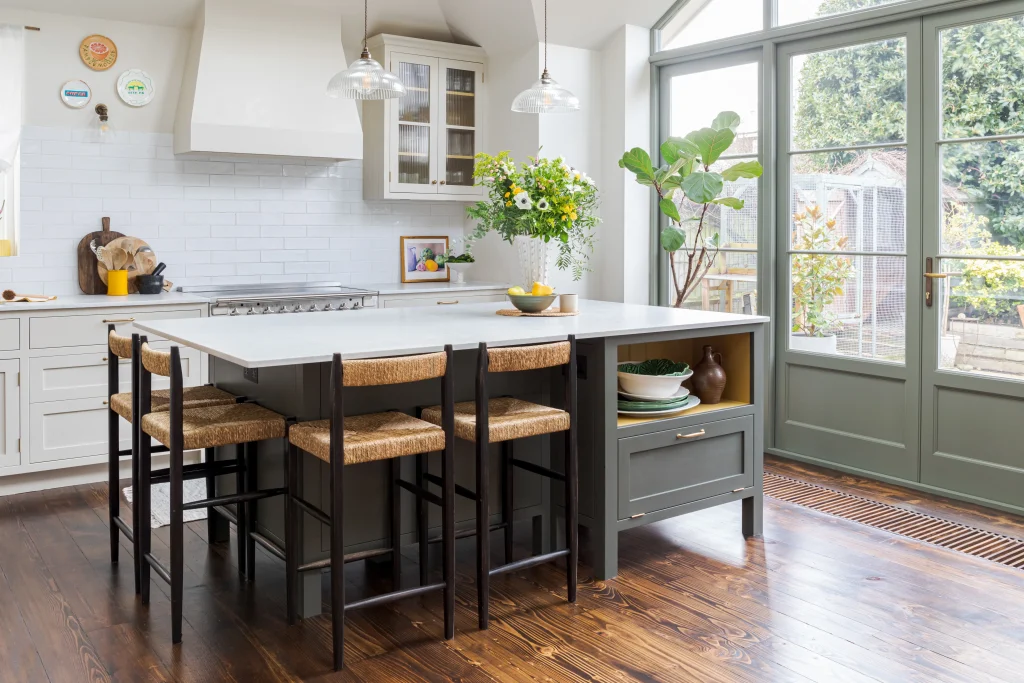
Island units become realistic where the floor area was previously too tight. A proper dining area can be incorporated into the kitchen space rather than sitting separately in another room. The connection between the kitchen and the garden, which in many period rear rooms is limited, can be opened up through bifold or sliding doors.
These are not purely aesthetic decisions. How the extended kitchen connects to the rest of the house, and how it will actually be used day to day, should be part of the brief from the outset rather than resolved at the design stage.
Timeline
A kitchen extension project takes longer than a standard kitchen renovation.
Building work typically runs for eight to sixteen weeks depending on the scale of the extension. The kitchen cannot go in until the build is complete, which means the total timeline from first conversations to handover sits at somewhere between nine months and a year for most projects, and longer for more complex ones.
Working backwards from a target date at the start of the project is the most useful thing a homeowner can do. Understanding the full timeline early means it can be planned around rather than discovered halfway through.
Frequently Asked Questions
Most rear extensions fall under permitted development and do not require planning permission, provided they meet the relevant criteria. The rules vary by property type, size and location. Properties in conservation areas and listed buildings have additional restrictions. Confirming this at the outset of the project avoids complications later.
Ideally, involve both at a similar stage. Decisions made early in the building design can significantly affect what the kitchen layout can do. A kitchen designer who is part of the conversation from the beginning can flag constraints before they become fixed in the build.
From initial conversations to handover, nine months to a year is a realistic expectation for most projects. Building work, the kitchen manufacturing lead time and installation all need to be sequenced. Complex projects or those requiring planning permission can take longer.
The brief and early design work can develop during the build, which makes good use of the time. Detailed cabinetry dimensions are confirmed once the structure is complete and the final measurements are known.
A larger footprint typically enables island units, a dining area within the kitchen space, and a better connection to the garden through wider or full-width glazing. What becomes possible depends on the specific dimensions and the brief.
The Next Step
A kitchen extension creates real opportunity. Making the most of it means thinking about the kitchen and the building together, from the beginning of the project rather than the end of it.
Kate Feather designs bespoke kitchens for families across South West London, including Teddington, Richmond and Twickenham. Get in touch to discuss your project.