
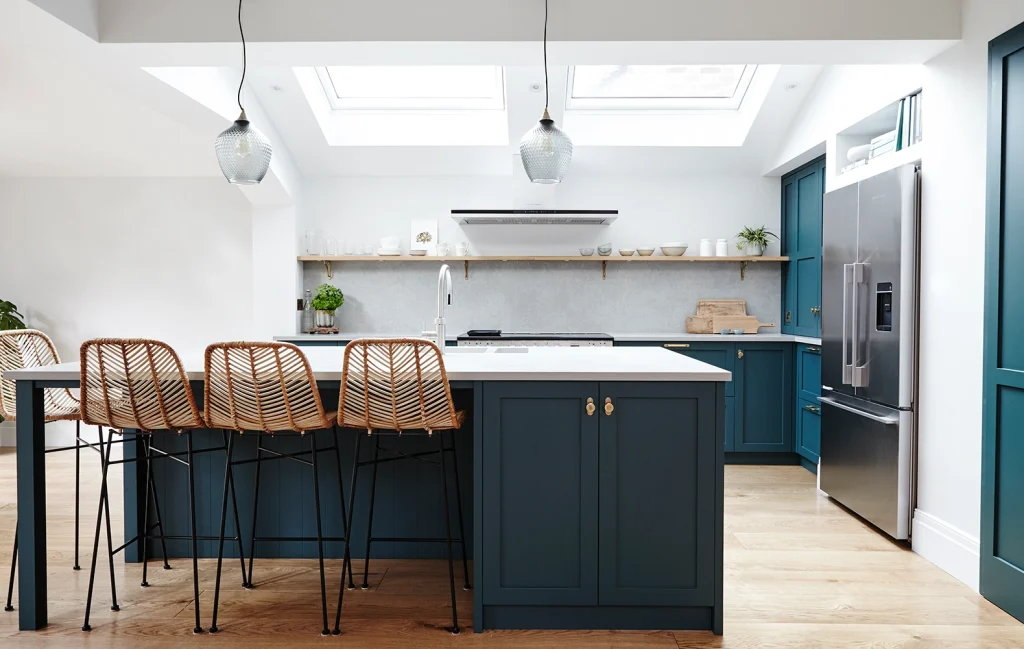
For many households, the kitchen is the most intensively used space in the home. It needs to support cooking, eating, working, socialising and often all of these at once. Designing a kitchen for family living is therefore not about creating a showpiece. It is about creating a space that functions calmly and reliably under daily pressure.
A kitchen that works well for family life is rarely the most visually dramatic. Instead, it is defined by thoughtful planning, clear priorities and an understanding of how the space will be used over time.
Understanding How the Kitchen Is Really Used
The starting point for a family kitchen is not style, but behaviour. How many people use the kitchen at once, how routines overlap, and where friction currently exists all influence the design.
Morning routines may involve several people moving through the space at once. Evenings often combine cooking, homework, conversation and relaxation. Weekends bring a different rhythm altogether. A kitchen designed for family living must accommodate these shifts without feeling chaotic.
This requires an honest assessment of how the kitchen functions day to day. What works well, what feels cramped, and where compromises are currently being made all inform the layout.
Defining Zones Without Creating Barriers
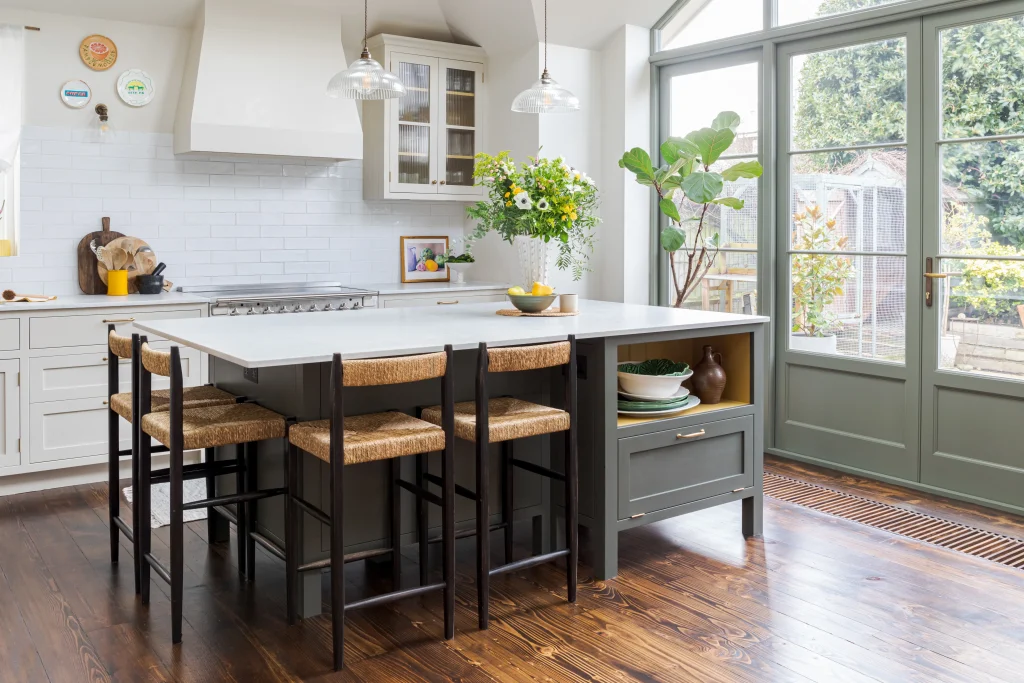
Family kitchens often benefit from clearly defined zones. Preparation, cooking, storage, seating and social areas each have distinct requirements.
Defining these zones does not mean physically separating them. Instead, subtle changes in layout, lighting or cabinetry can create a sense of order without disrupting the openness of the space.
This approach allows the kitchen to feel structured and calm while remaining flexible. It also makes it easier for the space to adapt as family needs change.
You can explore a selection of recent kitchen design projects here
Planning for Flow and Movement
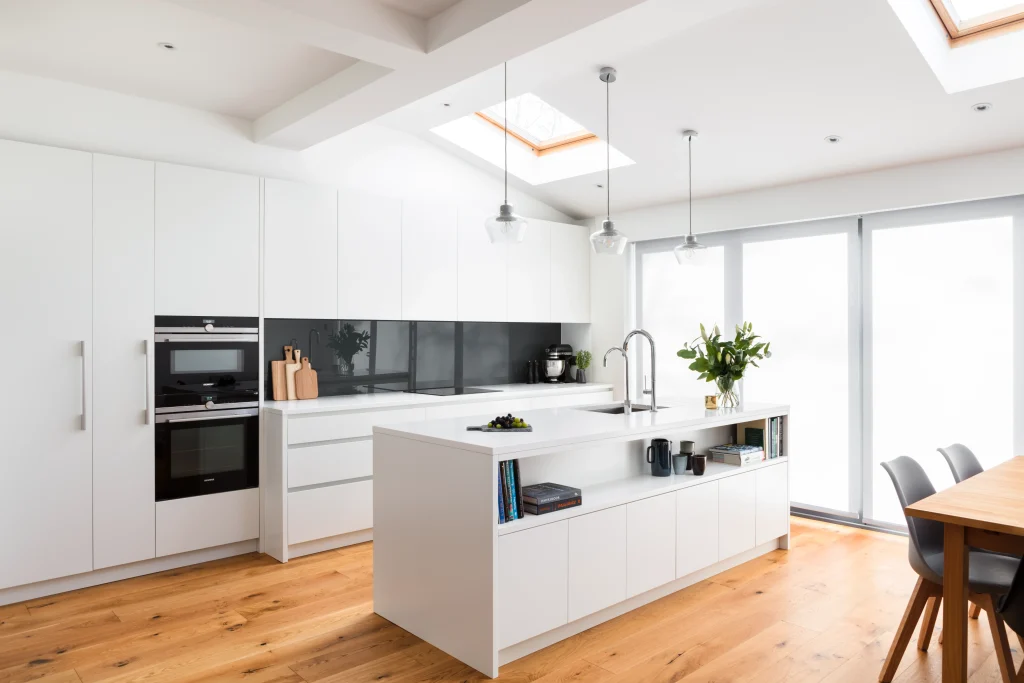
Movement is one of the most critical considerations in a family kitchen. Poor circulation quickly becomes frustrating when several people are sharing the space.
Clear routes through the kitchen help prevent bottlenecks, particularly between key areas such as cooking zones, seating and access points to other rooms. Walkways should feel generous enough to allow people to pass comfortably without interrupting tasks.
A well-planned layout allows different activities to take place simultaneously. Cooking can happen alongside conversation or homework without people competing for space.
Storage That Supports Daily Routines
Effective storage is essential in a family kitchen. When storage is poorly planned, clutter builds quickly and the space becomes harder to use.
Everyday items should be easy to access and logically positioned. Less frequently used items can be stored elsewhere without encroaching on main work areas. Storage solutions should reflect how the kitchen is actually used, rather than aiming to maximise capacity at all costs.
Well-considered storage reduces visual noise and helps the kitchen remain comfortable to live in, even during busy periods.
Designing for Durability and Longevity
Family kitchens work hard. Surfaces, cabinetry and fittings need to withstand frequent use without requiring constant maintenance.
Durability does not mean sacrificing aesthetics. Materials should be chosen for their ability to age well and remain practical over time. Finishes that show wear quickly or require excessive care often become frustrating in a family setting.
A kitchen designed for longevity continues to function well as children grow and routines evolve. This reduces the need for premature updates and ensures the space remains useful for many years.
Seating That Encourages Use Without Dominating the Space
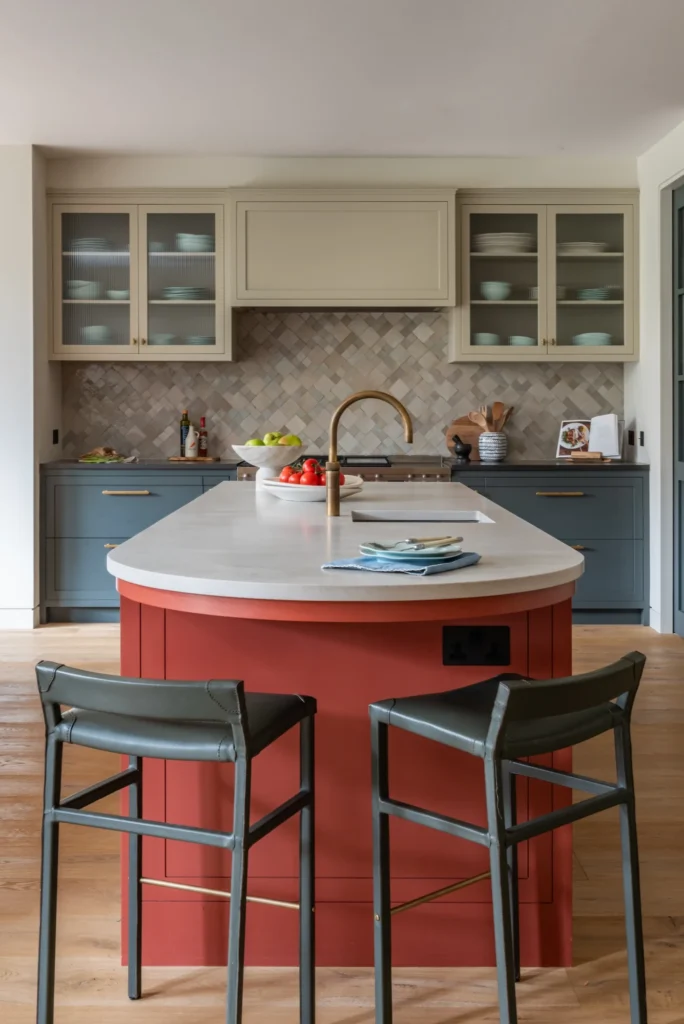
Seating is often a central feature in family kitchens, but it needs to be carefully integrated. Oversized islands or large dining areas can overwhelm the space and restrict movement.
The most successful designs consider how seating is used day to day. Casual seating may support quick meals or conversation during cooking, while separate dining areas can accommodate longer gatherings.
Balancing seating with circulation and work areas ensures the kitchen remains functional rather than becoming crowded.
Lighting as a Practical Tool
Lighting plays a vital role in family kitchens. It needs to support a range of activities, from detailed preparation to relaxed evenings.
Task lighting ensures work areas are well illuminated, while ambient lighting helps the space feel comfortable and welcoming. Layered lighting allows the atmosphere to shift throughout the day without requiring major changes to the space.
Well-planned lighting contributes significantly to how the kitchen feels and functions, particularly in homes where the kitchen is used from early morning through to late evening.
Designing for Flexibility Over Time
Family life is rarely static. Children grow, routines change and the way the kitchen is used evolves.
A successful family kitchen is designed with this flexibility in mind. Layouts that allow for adjustment, storage that can be repurposed and seating that accommodates different uses all contribute to a kitchen that remains relevant.
Rather than designing for a single moment in time, the focus should be on creating a framework that adapts comfortably as needs shift.
Integrating the Kitchen With the Wider Home
In many homes, particularly open-plan layouts, the kitchen is closely connected to living areas. This relationship needs to be carefully managed.
The kitchen should feel part of the wider space without dominating it. Materials, finishes and proportions should transition naturally into adjoining rooms, creating a sense of cohesion.
This integration helps the kitchen support family life beyond cooking alone, allowing it to function as a social and practical hub.
Avoiding Over-Design
One of the risks in family kitchens is over-design. Too many features, finishes or focal points can make the space feel busy and difficult to live with.
Restraint is often the most effective approach. Prioritising function, proportion and clarity results in a kitchen that feels calm even when it is being used heavily.
This simplicity allows family life to take centre stage, rather than the design itself.
A Kitchen That Supports Everyday Life
A well-designed family kitchen does not draw attention to itself. It works quietly in the background, supporting routines and adapting to change.
When planning is thorough and decisions are made with everyday use in mind, the kitchen becomes a reliable and comfortable part of family life rather than a source of compromise.
For homeowners considering a kitchen designed around family living, an initial consultation can help clarify priorities and explore how a bespoke approach could support the way the space is used.