
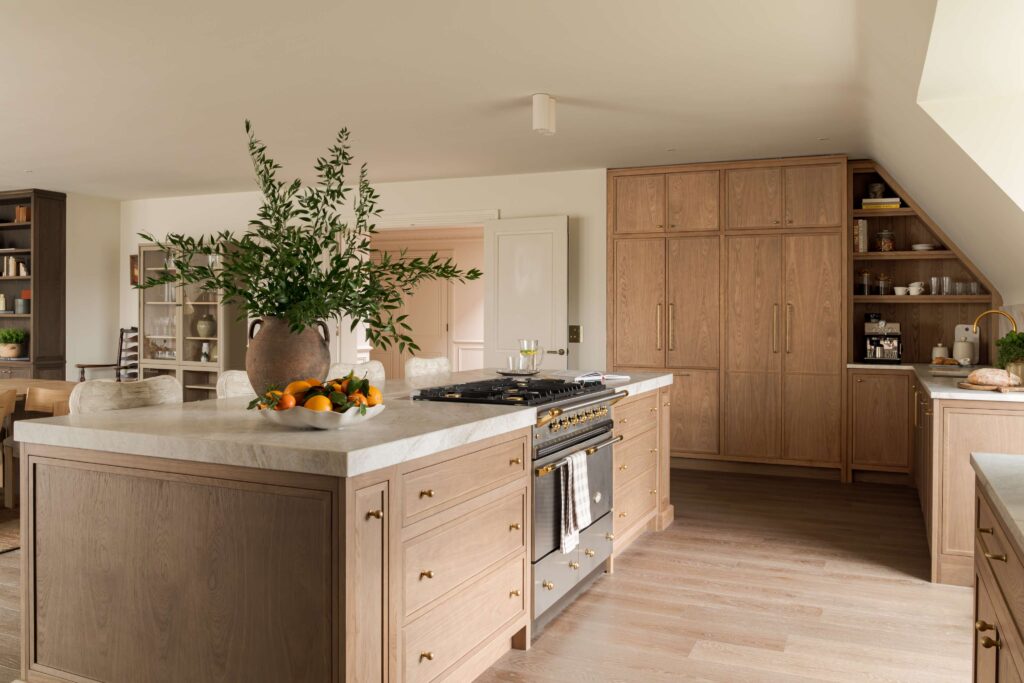
The term “bespoke kitchen” is used widely, but its meaning is often unclear. In many cases, it has come to describe a kitchen that offers a selection of finishes or configurable options, rather than one that is genuinely designed from scratch.
A truly bespoke kitchen is something different. It is not defined by a catalogue, a fixed range, or a prescribed set of dimensions. Instead, it is shaped entirely by the space it occupies and the people who use it. Every decision, from layout to detailing, is made in response to the home and how it is lived in.
Designed From the Space Outwards
One of the defining characteristics of a bespoke kitchen is that the design begins with the architecture of the property. Ceiling heights, room proportions, structural elements and natural light all play a role in shaping the layout.
Rather than adapting a standard system to fit a room, a bespoke approach allows the kitchen to be developed in direct response to the space itself. This is particularly important in homes where dimensions are irregular or where original architectural features need to be respected.
In period properties, this might mean working carefully around chimney breasts, alcoves or uneven walls. In more contemporary homes, it may involve creating a layout that sits comfortably within an open-plan environment. In both cases, the design is driven by the building rather than imposed upon it.
Designed From the Space Outwards
One of the defining characteristics of a bespoke kitchen is that the design begins with the architecture of the property. Ceiling heights, room proportions, structural elements and natural light all play a role in shaping the layout.
Rather than adapting a standard system to fit a room, a bespoke approach allows the kitchen to be developed in direct response to the space itself. This is particularly important in homes where dimensions are irregular or where original architectural features need to be respected.
In period properties, this might mean working carefully around chimney breasts, alcoves or uneven walls. In more contemporary homes, it may involve creating a layout that sits comfortably within an open-plan environment. In both cases, the design is driven by the building rather than imposed upon it.
A Layout Shaped by How You Live
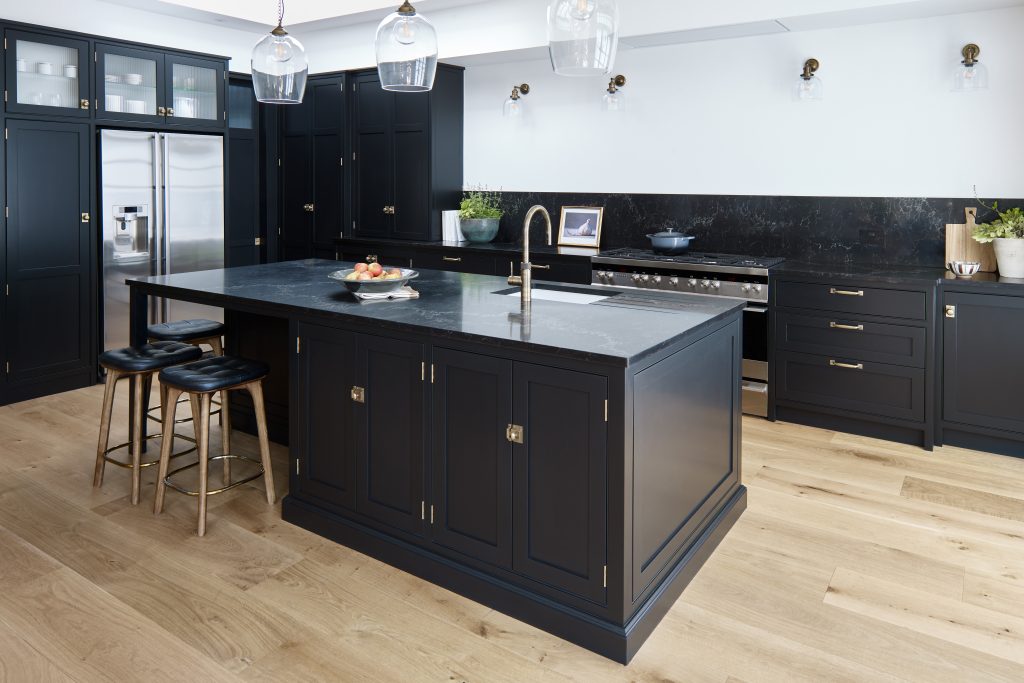
A bespoke kitchen is not just about how the space looks, but how it works on a daily basis. Understanding how the kitchen will be used is central to the design process.
This includes how many people typically use the kitchen at once, how cooking, dining and socialising overlap, and how the space needs to function at different times of day. Storage, circulation and work zones are planned around real habits rather than assumptions.
The result is a kitchen that feels intuitive. Movement through the space is natural, frequently used items are positioned where they are needed, and the layout supports everyday routines without requiring constant adjustment.
Beyond Standard Dimensions
Standard kitchen systems are built around fixed dimensions. While these can work well in some settings, they often struggle in homes with non-standard proportions.
A bespoke kitchen allows cabinetry, storage and detailing to be tailored precisely to the available space. This might involve adjusting depths to improve circulation, extending cabinetry to suit ceiling heights, or designing storage to fit awkward corners and alcoves.
These decisions may seem subtle, but they have a significant impact on how the kitchen feels to use. When proportions are right, the space feels calm and resolved rather than compromised.
Materials Selected With Purpose
In a bespoke kitchen, materials are chosen with intent rather than convenience. Consideration is given not only to appearance, but to how surfaces will wear, how finishes will age, and how different elements work together as a whole.
Rather than following trends, the focus is on creating a cohesive palette that feels appropriate to the home and comfortable over time.
This often results in kitchens that feel understated on first impression but continue to feel relevant and well balanced years later.
Material choices are also informed by how the kitchen will be used. Durability, maintenance and longevity are all part of the decision- making process.
The Role of Detailing
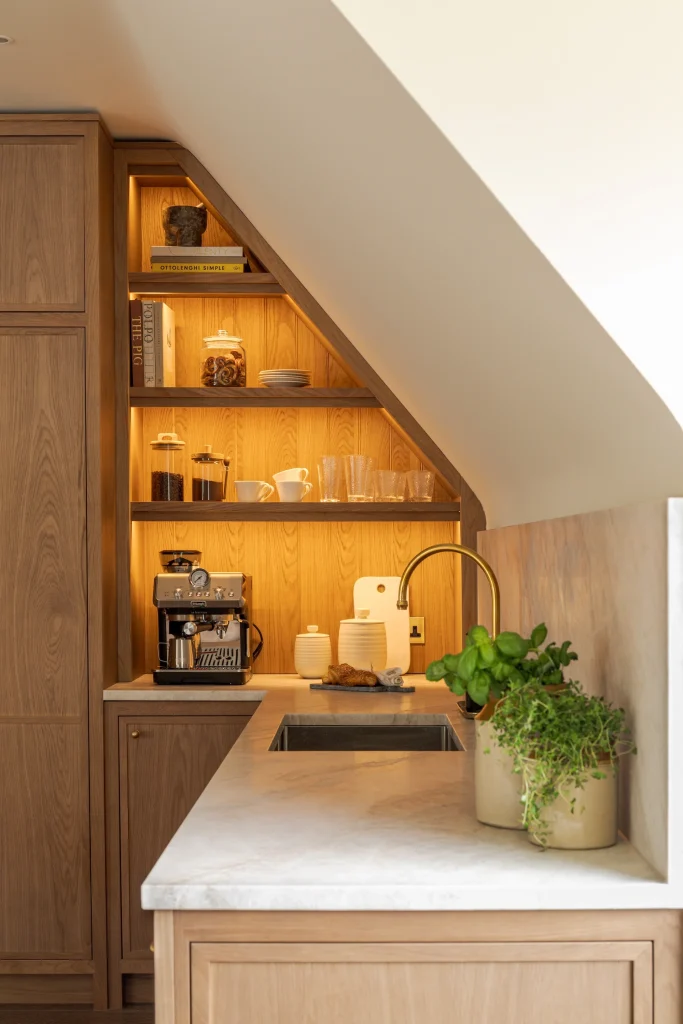
Detail is where bespoke design becomes most apparent. Small decisions, such as how cabinetry aligns with architectural features or how transitions between materials are handled, contribute to the overall sense of quality.
These details are rarely obvious at first glance, but they influence how the kitchen feels as a space. When handled well, they create a sense of cohesion and calm that is difficult to achieve with off-the-shelf solutions.
In a bespoke kitchen, detailing is not decorative for its own sake. It exists to support the overall design and ensure the kitchen feels considered rather than assembled.
Why Bespoke Does Not Mean Unlimited Choice
One common misconception is that bespoke design involves unlimited choice. In reality, a successful bespoke kitchen often involves careful restraint.
Rather than presenting endless options, the design process focuses on making informed decisions that serve the space and the way it is used. This clarity helps avoid visual clutter and ensures the kitchen feels resolved.
Guidance is a key part of the process. Understanding which options will enhance the design and which may detract from it is what allows a bespoke kitchen to feel confident rather than overwhelming.
Integration With the Wider Home
A bespoke kitchen is designed as part of the home, not as a standalone feature. This means considering how it relates to adjoining rooms, how sightlines are managed, and how materials and finishes transition throughout the space.
In open-plan homes, this integration is particularly important. The kitchen should feel connected to surrounding living areas without dominating them. In more traditional layouts, it should sit comfortably within the sequence of rooms.
This holistic approach ensures the kitchen enhances the overall flow of the home rather than interrupting it.
Longevity as a Design Principle
A truly bespoke kitchen is designed with longevity in mind. This does not mean it avoids personality, but that it prioritises proportion, quality and balance over novelty.
Trends change quickly, but the fundamentals of good design remain consistent. By focusing on these fundamentals, a bespoke kitchen continues to feel appropriate and functional long after fashions have shifted.
This approach also supports sustainability. Designing a kitchen that will not need replacing prematurely reduces waste and ensures the investment continues to add value to the home.
The Value of Experience
Bespoke kitchen design relies heavily on experience. Knowing how different spaces behave, how materials age, and where potential challenges are likely to arise allows the design process to move forward with confidence.
This experience informs decisions at every stage, from initial layout planning to final detailing. It is what allows the kitchen to feel effortless rather than overworked.
If you’d like to see some of the previous bespoke kitchens we have built, you can check out our recent projects.
A Kitchen That Feels Inevitable
When a bespoke kitchen is done well, it feels as though it could not have been designed any other way. The layout makes sense, the proportions feel right, and the space supports daily life without drawing attention to itself.
This sense of inevitability is the result of careful planning, collaboration and an approach that places the home and its occupants at the centre of the design.
For homeowners considering a bespoke kitchen, an initial consultation is often the best way to explore what is possible and how a tailored design approach could work within their home.